
Specialized Property Maintenance Services: Your Complete Guide to Residential and Commercial Property Care
Specialized property maintenance services bring together targeted outdoor care disciplines—lawn and turf care, pest and insect control, irrigation, seasonal cleanups, snow removal, and holiday or permanent lighting—into an integrated plan that preserves property value and minimizes risk. This guide explains what those specialized services include, how residential and commercial needs differ, and why a preventative, scheduled approach delivers measurable savings and safer, more attractive properties. Property owners and managers will learn how fertilization and weed control programs, targeted pest management, irrigation winterization, seasonal cleanups, and reliable snow and lighting services work together as a preventative property maintenance checklist. The article maps practical steps, expected outcomes, and selection criteria for providers, then shows how local service features—reliability, proactive communication, local ownership, satisfaction guarantee, and free, transparent estimates—translate into easier decision-making. Read on to explore definitions, operational checklists, treatment timelines, and clear comparisons for residential and commercial contexts so you can plan maintenance that protects curb appeal and reduces emergency repairs.
What Are Specialized Property Maintenance Services?
Specialized property maintenance services are focused, scheduled interventions that preserve outdoor assets by addressing turf health, pest pressure, irrigation function, seasonal debris, winter hazards, and exterior lighting needs. These services work mechanistically—nutrient inputs promote root development, barrier pest treatments reduce infestation vectors, irrigation diagnostics prevent water loss, and timely snow removal reduces slip-and-fall liabilities—so each activity produces a specific property-level benefit. The integrated approach emphasizes predictable cadence and data-driven responses, which together improve long-term property performance and reduce the frequency of costly emergency repairs. Understanding this definition clarifies why providers package services into recurring plans and why coordinated scheduling matters for both residential and commercial sites.
This section lists the core service categories with short descriptions that highlight what each covers and their seasonal nature. The next subsections enumerate included services and contrast residential versus commercial maintenance differences to help readers match offerings to property needs.
Which Services Are Included in Comprehensive Property Care?
Comprehensive property care bundles several specialist services designed for outdoor asset longevity and safety. Lawn and turf care covers fertilization programs, weed control treatments, and tailored mowing schedules that promote density and curb appeal. Pest and insect control includes perimeter pest treatment, mosquito control programs, and targeted vole control strategies to protect plantings and reduce health risks. Irrigation work addresses sprinkler system repair, controller calibration, leak detection, and winterization to protect equipment over cold months. Seasonal cleanups—spring yard cleanup Sioux Falls and fall bed preparation—focus on debris removal and seasonal pruning to prepare landscapes for growth or dormancy. Snow removal and commercial snow removal contracts ensure priority plowing and de-icing, while outdoor holiday lighting installation or permanent landscape lighting enhance aesthetics and safety during darker months. These services often overlap seasonally and are scheduled to maximize site performance and minimize disruptions.
These service descriptions set the stage for comparing residential and commercial requirements, including differences in scale, equipment, and contract expectations.
How Do Residential and Commercial Maintenance Differ?
Residential and commercial maintenance differ primarily in scale, frequency, contract structure, and performance expectations, which changes how providers deploy resources and design plans. Residential work typically emphasizes curb appeal, weekly mowing cadence during the growing season, and elective enhancements like holiday lighting installation, while commercial contracts often require rapid snow response, liability-focused de-icing, and documented service-level agreements. Equipment needs diverge as well: commercial properties may need larger plows, fleet-level de-icing, and scheduled crews to meet turnaround times, whereas residential sites usually use smaller ride-on mowers or robotic lawn mowing systems for consistent appearance. Pricing and contracting reflect these differences—commercial clients frequently prefer seasonal contracts with priority response clauses, and residential clients opt for recurring packages or occasional maintenance visits. Understanding these contrasts helps property owners choose the right maintenance model for their site and budget, and it leads naturally into the benefits professional maintenance provides.
What Are the Benefits of Professional Property Maintenance?
Professional property maintenance combines preventative strategies and technical skill to reduce repair costs, protect occupants, and enhance property value through consistent, measurable outcomes. Mechanically, scheduled fertilization reduces turf stress and weed encroachment, irrigation maintenance eliminates water damage and waste, and timely snow removal reduces liability—each action creates a predictable improvement in asset lifespan and usability. The economic and non-economic benefits include lower emergency repair rates, sustained curb appeal that supports resale value, predictable operating budgets, and reduced management burden for owners and property managers. The following table summarizes how specific services map to primary benefits and typical outcomes so readers can compare value across common maintenance functions.
| Service | Primary Benefit | Typical Outcome/Value |
|---|---|---|
| Lawn & Turf Care | Improved plant health and curb appeal | Denser turf, fewer reseedings, higher perceived value |
| Pest & Insect Control | Reduced infestations and health risks | Lower treatment frequency, fewer plant losses |
| Irrigation Maintenance | Water efficiency and system longevity | Fewer leaks, lower water bills, reduced repair costs |
| Snow Removal | Safety and liability reduction | Faster clearance, fewer slip incidents, documented response |
| Lighting Services | Security and aesthetic enhancement | Increased nighttime safety and property attractiveness |
This comparison clarifies why property maintenance is an investment in preservation rather than a one-time expense. The next paragraphs explain how preventative maintenance saves costs and how peace of mind factors into choice of provider, and then introduce local provider attributes that translate those benefits into actionable value.
After outlining these benefits, it’s useful to see specific mechanisms through which preventative maintenance saves money and preserves value, which we cover next.
How Does Preventative Maintenance Save Costs and Enhance Property Value?
Preventative maintenance saves costs by catching small issues before they escalate into major repairs and by extending the service life of landscape and infrastructure components. For example, detecting an irrigation leak early prevents foundation moisture damage and lowers water bills, while regular fertilization prevents turf decline that would otherwise require re-sodding. Many industry analyses indicate scheduled upkeep can reduce emergency repair costs significantly, and consistent maintenance preserves curb appeal that supports resale or tenant retention. Preventative attention also allows for predictable budgeting and staged capital improvements rather than unpredictable, high-cost fixes. With scheduled inspections and documented service steps, property owners can quantify ROI through fewer emergency calls, lower replacement frequency, and steadier aesthetic value.
These cost-savings arguments lead into the non-monetary benefit of peace of mind: owners avoid last-minute crises and enjoy reliable communications and service delivery.
Why Is Peace of Mind Important in Property Care?
Peace of mind stems from reliable schedules, proactive communication, and clear guarantees that reduce owner stress and administrative overhead. When a provider delivers documented inspections, timely updates, and a satisfaction guarantee, property managers can focus on operations rather than firefighting. Effective communication also means predictable responses to weather events—especially important for snow removal and pest surges—so occupants face fewer disruptions and safety incidents. The value of peace of mind is both operational and psychological: lower risk exposure, fewer emergency vendor calls, and a documented service history that supports insurance and compliance needs. Given these assurances, many owners weigh provider reliability and communication protocols as heavily as price when choosing specialized property maintenance.
Building on those selection criteria, the next section examines specific lawn and turf solutions and timing that produce the outcomes discussed here. Before leaving this section, note that Specialized Property Care offers local service features—reliability, proactive communication, local ownership, a satisfaction guarantee, and free, transparent estimates—to convert these benefits into tangible client experiences; readers in Sioux Falls, Tea, Harrisburg, and Brandon, SD can request a free consultation or quote to discuss a preventative property maintenance checklist tailored to their site.
What Lawn and Turf Care Solutions Does Specialized Property Care Offer?
Lawn and turf care programs focus on nutrient management, weed suppression, mowing strategy, and aeration or overseeding as needed to maintain dense, resilient turf through seasonal cycles. The biological mechanism is simple: balanced fertilization supports root growth and stress tolerance, while targeted weed control reduces competition for light and nutrients, which together raise turf density and appearance. Optimal timing and frequency depend on local climate and turf species—scheduling applications at key growth stages prevents seasonal decline and maximizes product efficacy. Below is a compact table outlining typical treatments, key attributes, and recommended seasons or frequencies to help homeowners plan lawn fertilization Sioux Falls and related services.
| Treatment | Key Attribute | Recommended Season/Frequency |
|---|---|---|
| Fertilization programs | Balanced N-P-K profiles with slow-release options | Early spring, late spring, early fall (3–4 applications/year) |
| Weed control treatments | Pre-emergent and post-emergent options | Pre-emergent in early spring; spot treatments as needed |
| Mowing (robotic/regular) | Frequency and cut-height management | Weekly during growth season; robotic mowing provides frequent clipping |
| Aeration & overseeding | Relieves compaction, improves seed contact | Annual or biennial in early fall |
This table helps property owners plan maintenance windows and prioritize budgeted treatments. The next subsections explain how fertilization and weed control directly improve lawn health, and compare robotic mowing benefits to regular professional mowing so owners can choose the right approach.
How Do Fertilization and Weed Control Improve Lawn Health?
Fertilization supplies essential nutrients—nitrogen, phosphorus, and potassium—using slow-release or timed-release formulas that build root mass and sustain blade growth while reducing nutrient leaching. This mechanism improves drought tolerance, encourages deeper rooting, and speeds recovery from wear, which in turn reduces the need for costly replanting or irrigation overuse. Targeted weed control removes competitive species so desirable turf grasses can occupy more canopy and improve density; pre-emergent herbicides stop weeds before seedlings establish, while post-emergent spot treatments handle escapes with minimal turf impact. Timing matters: applying the right product at the correct phenological stage ensures maximum uptake and minimal environmental impact, improving long-term lawn health and appearance.
Understanding these biological pathways leads into practical choices about mowing frequency and technology, including robotic lawn mowing benefits versus traditional approaches.
What Are the Advantages of Robotic and Regular Lawn Mowing?
Robotic lawn mowing offers frequent, low-impact cuts that maintain a uniform grass height and reduce scalping, promoting healthier regrowth and less visible stress. Because robots mow more often, clippings are finely mulched and return nutrients to the soil, supporting a reduced-fertilizer strategy and lowering routine maintenance costs. Regular professional mowing with high-capacity equipment offers rapid results for larger properties and precise edging that robotic units may not match, supporting immediate curb appeal for special events or commercial properties. Choice depends on scale, desired aesthetics, and budget: robotic mowing benefits include consistency and labor savings for residential and smaller commercial sites, while traditional mowing suits high-visibility commercial landscapes or heavily trafficked areas. Both approaches can be combined strategically to balance efficiency, turf health, and appearance goals.
After deciding on mowing strategy, property owners should also consider integrated pest management to protect turf and plantings, which is covered next.
A brief local note: Specialized Property Care provides lawn fertilization and mowing options across Sioux Falls, Tea, Harrisburg, and Brandon, SD—request a free, transparent estimate to evaluate which mowing approach fits your property.
How Does Specialized Property Care Manage Pest and Insect Control?
Effective pest and insect control balances targeted treatments with safety protocols and habitat reduction to minimize chemical use while controlling vectors that damage plants or threaten occupants. The integrated pest management (IPM) approach mixes monitoring, exclusion, habitat modification, and targeted perimeter pest treatments to reduce pest pressure over seasons. Common regional issues include mosquitoes and voles, each requiring different detection and treatment strategies; mosquito control programs often combine larvicide applications with barrier sprays and habitat reduction, while vole control focuses on detection, trapping, and turf repair. Safe application practices, homeowner prep, and scheduled follow-ups are essential to sustained results and minimize non-target impacts.
The next subsections detail effective methods for mosquito and perimeter pest control and outline humane, efficient vole control with turf restoration steps that minimize long-term damage.
After these technical details, readers will see how a localized IPM plan reduces pesticide reliance and improves long-term landscape resilience; availability for pest services in Sioux Falls and surrounding communities can be discussed via a free consultation or quote.
What Are Effective Methods for Mosquito and Perimeter Pest Control?
Mosquito control programs combine source reduction, larviciding, and barrier treatments to reduce adult populations and biting risk. Source reduction targets standing water removal and drainage fixes, while larvicide treatments applied to breeding spots interrupt the lifecycle before adults emerge. Barrier perimeter pest treatments create a treated zone around structures and plantings to deter ticks, ants, and perimeter-invading pests, with follow-up visits scheduled based on seasonal pressure. Safe application practices include clear homeowner prep instructions, targeted product placement, and consideration for pollinators and pets, ensuring effective control with minimized environmental impact.
With mosquito and perimeter strategies in place, early detection and humane handling of burrowing rodents like voles preserves turf health and reduces repeated damage, which we address next.
How Is Vole Control Handled Safely and Efficiently?
Vole control begins with detection: scattered runways, chewed grass crowns, and dead patches are typical early signs that indicate active burrowing and feeding under turf. Efficient control combines habitat modification (removing excessive groundcover), targeted trapping or baiting where appropriate, and turf repair plans such as overseeding and topdressing to restore damaged areas. Safety considerations prioritize non-target species protection and proper placement of control devices; follow-up monitoring ensures populations are reduced and nesting sites are eliminated. Post-control turf restoration typically includes aeration, reseeding, and tailored fertilization to accelerate recovery and prevent re-infestation.
After addressing pest control, irrigation health ensures plants receive correct moisture and irrigation systems do not contribute to pest-friendly standing water, so the next section covers irrigation and seasonal cleanups.
What Irrigation and Seasonal Cleanup Services Are Available?
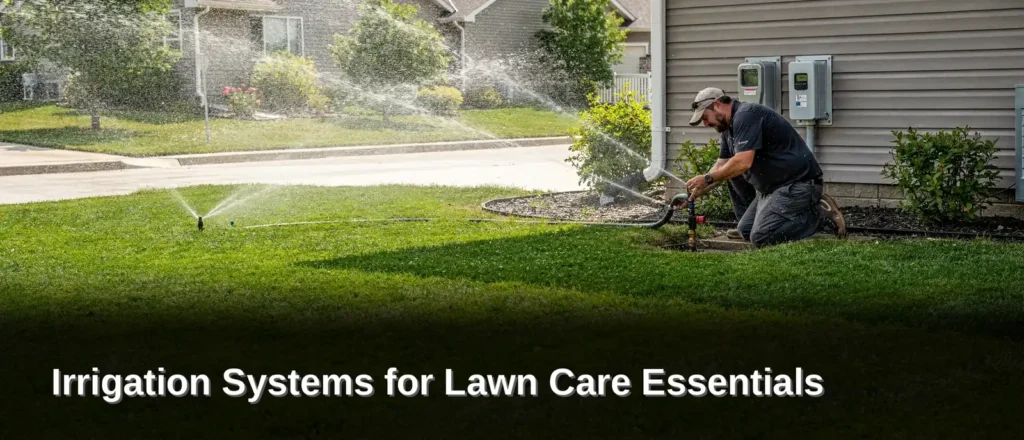
Irrigation and seasonal cleanup services ensure that watering systems operate efficiently and that landscapes transition smoothly between growth and dormancy, reducing disease risk and system failures. Irrigation work covers startup inspections, sprinkler system repair, controller calibration, leak detection, and winterization procedures that protect components during freezing months. Seasonal cleanups include spring yard cleanup Sioux Falls tasks—debris removal, bed preparation, and early-season fertilization—and fall cleanups that prepare beds and irrigation systems for winter. Together, these services form a preventative property maintenance checklist that reduces water waste, prevents freeze damage, and primes landscapes for healthy growth in the following season. The next table clarifies common irrigation tasks, typical issues addressed, and expected service steps so homeowners understand what to expect from professional winterization and repairs.
| Irrigation Task | Typical Issue Addressed | Expected Service Steps |
|---|---|---|
| Startup inspection | Clogged heads, misalignment | Inspect controllers, adjust heads, test zones |
| Sprinkler system repair | Leaks, broken heads | Isolate leaks, replace heads, check valves |
| Winterization (blowout) | Freeze damage to pipes | Perform blowout, drain lines, secure controller |
| Controller & sensor maintenance | Incorrect scheduling or faulty sensors | Update schedules, calibrate rain sensors, replace batteries |
This table helps owners anticipate the irrigation winterization cost drivers and scope. The next subsection provides a stepwise winterization checklist to target how-to featured snippets and show exact homeowner expectations for blowout procedures.
Following these practical steps, owners should couple seasonal cleanups with irrigation checks to avoid winter outages and spring surprises; a free, transparent estimate can clarify local pricing and scheduling.
How Are Irrigation Systems Maintained and Winterized?
Maintaining and winterizing irrigation systems involves inspection, leak detection, controller checks, and a proper blowout sequence to remove water from lines and protect pipes from freezing. First, an inspection identifies misaligned or clogged heads and any leaks that could cause overwatering or damage. Next, controllers and sensors are tested and schedules adjusted for seasonal evapotranspiration changes; calibration ensures efficient water use. Finally, the blowout procedure uses low-pressure compressed air to clear lines, then batteries or settings are secured to prevent unintended activation through winter. Planning these steps in early fall minimizes freeze damage and reduces irrigation repair costs in spring.
Indeed, studies confirm that effective drainage is paramount to safeguarding irrigation systems against the damaging effects of freezing temperatures.
Preventing Irrigation Sprinkler Freezing in Cold Climates
Spray irrigation sprinklers exposed to winter sub-freezing air temperatures may freeze and prevent year-round spray dispersal of treated wastewater effluent in cold geographic regions. Drainage of the sprinklers at the end of each irrigation event is proposed as a solution. Sprinkler drainage prevented the irrigation system from freezing, but rotational delay may interfere with a proper water distribution.
Investigating methods for preventing cold induced freezing of irrigation sprinklers, 2011
After winterization, spring and fall seasonal cleanups prepare plantings for growth or dormancy; the following section lists typical cleanup tasks and their rationale.
What Tasks Are Included in Spring and Fall Seasonal Cleanups?
Seasonal cleanups remove debris, reset planting beds, and perform targeted pruning to support plant health and landscape aesthetics across seasonal transitions. Spring cleanups include debris removal, bed edging, early fertilization to jumpstart growth, and inspections for winter damage that require reseeding or spot treatments. Fall cleanups emphasize leaf removal, pruning of deadwood, mulching, and preparing irrigation for winterization to reduce disease and pest harborage. These tasks protect soil health, improve moisture retention, and reduce stress on plants as they enter seasonal shifts. A tidy cleanup also enhances curb appeal and lowers insect overwintering sites, which complements IPM strategies and reduces spring control needs.
Integrating cleanup schedules with irrigation maintenance and pest control creates a comprehensive annual plan that limits emergency issues and streamlines contractor coordination.
How Does Specialized Property Care Provide Snow Removal and Holiday Lighting?
Professional snow removal and lighting services protect safety and enhance property experience by combining rapid response with proper equipment and electrical safety standards. Snow removal focuses on priority rules, response times, and de-icing strategies to keep walkways and parking areas safe and compliant; operations typically use plows, loaders, and calibrated de-icing applications to balance traction and surface protection. Holiday and permanent lighting services design layouts, manage safe electrical installation, and plan seasonal removal or ongoing maintenance for permanent systems. Together, these services reduce liability during winter months and add functional, aesthetic value year-round. Below we compare key features of residential and commercial snow removal and outline lighting installation and maintenance basics to guide selection.
The following subsections detail operational differences for snow removal and outline considerations for safe outdoor holiday and permanent lighting installation and upkeep.
What Are the Key Features of Residential and Commercial Snow Removal?
Residential and commercial snow removal differ in priority, scale, and contractual expectations, which affects response and equipment deployment. Residential services prioritize driveway and sidewalk clearance with attention to property features and vehicle access, often scheduled per-storm or on a season-pass basis. Commercial snow removal contracts emphasize parking lot clearance, priority lane access, and documented service levels that support business continuity; these agreements often include de-icing and post-storm cleanup. Equipment ranges from smaller plows and walk-behind units for residential work to larger plow trucks, loaders, and spreaders for commercial lots. Typical SLA language—priority tiers, response windows, and clearing standards—helps set expectations and reduce disputes after storms.
- Typical residential priorities include driveways, walks, and mailbox access.
- Typical commercial priorities include access lanes, ADA routes, and parking aisles.
- De-icing best practices balance safety with surface protection and environmental concerns.
Understanding these priorities helps owners negotiate appropriate service terms and ensures winter readiness.
How Is Outdoor Holiday and Permanent Lighting Installed and Maintained?
Outdoor lighting installation begins with design and layout planning that considers focal points, wiring routes, transformer sizing, and local electrical code requirements to ensure safety and longevity. Temporary holiday lighting focuses on attachment methods that avoid plant damage and allow seasonal removal, while permanent landscape lighting uses dedicated low-voltage fixtures, buried wiring, and sealed connections for year-round use. Maintenance tasks include bulb replacement, transformer checks, timer and sensor calibration, and seasonal inspections to prevent water intrusion and electrical faults. Warranties and documented maintenance plans for permanent systems protect long-term investment and reduce reactive repair costs. Proper installation and scheduled upkeep ensure both safety and consistent aesthetic performance.
After assessing lighting and snow services, property owners can align seasonal contracts with operational priorities; Specialized Property Care serves Sioux Falls and neighboring communities and offers a satisfaction guarantee along with free, transparent estimates for snow removal and lighting projects—contact to request a free consultation or quote.
Frequently Asked Questions
What areas does Specialized Property Care serve?
Specialized Property Care is a locally owned company serving Sioux Falls, Tea, Harrisburg, and Brandon, South Dakota. Its lawn and turf care, pest and insect control, irrigation, seasonal cleanup, and permanent lighting services are all delivered to residential and commercial properties within these communities. Because the company is local, crews understand regional climate patterns, growing seasons, and freeze timelines that affect scheduling for fertilization, irrigation winterization, and seasonal cleanups. Property owners and managers in these areas can request a free consultation or quote to discuss a maintenance plan tailored to their specific site, budget, and property type.
Is pricing for property maintenance services transparent and upfront?
Yes. Specialized Property Care emphasizes transparent, upfront pricing across all of its service packages so clients can make informed decisions without unexpected costs. Residential clients typically choose recurring packages or occasional maintenance visits, while commercial clients often prefer seasonal contracts with priority response clauses and packages tailored to their operational needs. Regardless of property type, clear pricing information is provided before work begins. This transparency reflects the company’s broader commitment to accountability and customer-centric communication, helping property owners plan predictable maintenance budgets rather than facing surprise charges for lawn care, pest control, irrigation, or lighting services.
What happens during a free consultation or estimate?
A free consultation or quote from Specialized Property Care allows property owners and managers to discuss their site’s specific needs and receive a preventative property maintenance checklist tailored to their property. This typically covers relevant services such as lawn fertilization, pest management, irrigation care, seasonal cleanups, or permanent lighting, matched to whether the property is residential or commercial. The estimate is transparent, meaning pricing is clearly explained upfront with no hidden costs. This process helps clients compare service options, understand expected outcomes, and choose a maintenance plan that fits their budget and property goals before committing to any work.
How often should irrigation systems be inspected to prevent freeze damage?
Irrigation systems should be inspected at key seasonal points: a startup inspection in spring to check for clogged or misaligned heads, and a winterization or blowout procedure in early fall before freezing temperatures arrive. Planning the blowout sequence early minimizes freeze damage to pipes and reduces the risk of costly irrigation repairs the following spring. Controllers and sensors should also be checked and recalibrated seasonally to reflect changing evapotranspiration needs. Following this inspection and winterization schedule protects irrigation equipment, prevents water waste from undetected leaks, and helps ensure the system performs reliably when it’s needed again for the growing season.
What are signs that a lawn needs aeration or overseeding?
Common signs include compacted soil that resists water absorption, thinning turf density, and visible winter damage such as dead patches or bare spots that require reseeding or spot treatments. Aeration relieves soil compaction, which improves water and nutrient absorption and supports stronger root development. Overseeding fills in thin or damaged areas to restore density and appearance. These treatments are typically recommended annually or biennially in early fall, when conditions favor seed establishment. Addressing these signs promptly helps turf recover from seasonal stress, reduces the need for costly re-sodding, and supports the long-term health goals of a fertilization and weed control program.
Does Specialized Property Care guarantee its work?
Yes. Specialized Property Care stands behind its lawn care, pest control, irrigation, seasonal cleanup, and permanent lighting services with a satisfaction guarantee and free, transparent estimates. If any service does not meet expectations, the company’s accountability commitment means the issue is corrected with integrity and care rather than left unresolved. This guarantee, paired with proactive communication and a documented service history, gives property owners and managers added confidence and reduces the administrative burden of managing outdoor maintenance. Clients in Sioux Falls, Tea, Harrisburg, and Brandon, SD can request a free consultation or quote to discuss guaranteed service options for their property.
Conclusion
Specialized property maintenance succeeds when lawn and turf care, pest and insect control, irrigation upkeep, seasonal cleanups, and permanent lighting are managed as one coordinated, preventative plan rather than isolated tasks. Fertilization and weed control build denser turf, integrated pest management protects plantings and reduces health risks, scheduled irrigation inspections and winterization prevent freeze damage and water waste, and seasonal cleanups paired with permanent lighting keep properties safe and attractive year-round. For both residential and commercial property owners, this combination of reliability, transparent pricing, and accountability translates directly into lower repair costs, steadier curb appeal, and greater peace of mind. Property owners and managers in Sioux Falls, Tea, Harrisburg, and Brandon, SD can request a free consultation or quote to build a maintenance checklist tailored to their site.