
Organic lawn care builds soil health slowly through natural materials, while chemical fertilizers deliver rapid greening with synthetic compounds. Homeowners with pets or children often prefer organic methods for safety. Specialized Property Care offers year-round lawn services in Sioux Falls, helping clients choose the right approach for their property.
Key Takeaways
Organic lawn care builds soil health gradually through natural materials, while chemical fertilizers deliver rapid greening with synthetic compounds.
Synthetic fertilizers show visible greening in 3 to 7 days, whereas organic fertilizers take 2 to 6 weeks.
Chemical residues persist in soil for weeks, exposing children and pets through contact and grooming.
Organic methods prioritize soil biology, reducing thatch buildup and drought stress without synthetic inputs.
What Are the Core Differences?
Comparing Organic vs Chemical Lawn Care starts with one fundamental distinction. Conventional lawn care relies on synthetic fertilizers and pesticides, according to the CFAES Knowledge Hub. Organic lawn care uses naturally occurring resources to maintain turf without synthetic products.
Specialized Property Care offers year-round lawn, pest, irrigation, snow, and lighting services in Sioux Falls, SD. The company provides free, transparent estimates for every service. Homeowners evaluating both approaches benefit from understanding what each method delivers.
Criteria | Organic Lawn Care | Chemical Lawn Care |
|---|---|---|
Primary inputs | Naturally occurring resources | Synthetic fertilizers and pesticides |
Soil health focus | Builds long-term soil biology | Delivers rapid nutrient availability |
Weed and pest control | Cultural practices, natural controls | Synthetic pesticide applications |
Results timeline | Gradual improvement over seasons | Faster visible greening |
Environmental profile | No synthetic products | Synthetic chemical inputs |
What Does Conventional Lawn Care Actually Use?
Conventional lawn care implies synthetic fertilizers and pesticides. These products deliver nutrients quickly and suppress pests effectively. The tradeoff involves chemical exposure on the property.
How Does Organic Lawn Care Work Without Synthetics?
Organic lawn care maintains a home lawn using naturally occurring resources. Proper knowledge lets homeowners skip synthetic products entirely. Techniques include soil building, natural weed control, and seasonal adjustments. Specialized Property Care guides Sioux Falls clients through organic lawn care techniques suited to South Dakota growing conditions.
The company’s year-round service model covers lawn, pest, irrigation, snow, and lighting needs. Free, transparent estimates help clients compare options without pressure.
How Do Speed and Results Compare?
Synthetic fertilizers deliver visible lawn greening within days of application. Organic fertilizers work more slowly, building soil health and releasing nutrients over weeks and months rather than immediately.
Which Fertilizer Shows Faster Greening?
Synthetic formulations provide the quickest color response. These products are comparing organic vs chemical lawn care in terms of immediacy. Synthetic fertilizers are most commonly used, readily available, and generally cost effective according to Milorganite’s product comparison data. Lawn owners see rapid results because nutrients dissolve instantly in water and enter grass roots without microbial processing.
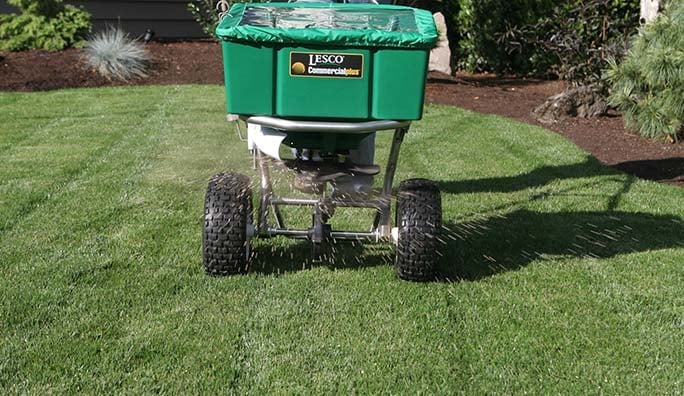
Organic fertilizers take a longer path. Some organic fertilizers are in their raw form, not pellets, and may take extra effort to distribute. Soil microbes must break down the organic matter before nutrients become plant-available. The tradeoff is steady, sustained feeding rather than a quick flush of growth.
Speed and Results at a Glance
Factor | Synthetic Fertilizer | Organic Fertilizer |
|---|---|---|
Visible greening | 3 to 7 days | 2 to 6 weeks |
Nutrient release | Immediate dissolution | Microbial breakdown required |
Application effort | Uniform pellets, easy spreading | Raw forms may need extra distribution work |
Long-term soil impact | Feeds grass directly | Builds soil structure |
Specialized Property Care brings over 35 years of combined crew experience to lawn treatment decisions. The company delivers consistent, high-quality service backed by proactive communication. This means clients receive clear guidance on what results to expect and when.
Does Slower Feeding Produce Better Long-Term Outcomes?
Organic methods prioritize soil biology over fast top-growth. Stronger root systems develop when grass receives gradual nutrition. The approach reduces thatch buildup and drought stress. Synthetic programs require careful timing to avoid nutrient burn or wasteful runoff. Sioux Falls homeowners balancing speed against sustainability benefit from professional assessment of their specific turf conditions.
What About Soil Health and Safety?
Soil health and safety concerns drive the Comparing Organic vs Chemical Lawn Care decision for many Sioux Falls homeowners. Chemical treatments introduce risks that extend far beyond the turf itself. The CFAES Knowledge Hub reports concern that synthetic products harm humans, beneficial insects, wildlife, and pets. Those risks compound when lawn chemicals migrate into garden soils, water runoff, and indoor spaces tracked in on shoes and paws.
Maria’s Farm Country Kitchen documented the stakes in stark terms. Many commonly used lawn pesticides link to cancer, birth defects, reproductive effects, liver or kidney damage, neurotoxicity, and endocrine system disruption. A lawn treated with synthetic chemicals becomes a contact surface for children, pets, and bare feet. The soil beneath that lawn absorbs every application.
How do chemical lawn treatments affect family and pet safety?
Chemical residues persist in soil for weeks after application. Pets absorb them through paw contact and grooming. Children playing on treated lawns face direct exposure. The CFAES Knowledge Hub identifies these pathways as the primary reason homeowners seek natural alternatives.
What makes organic soil management safer?
Organic approaches build soil biology rather than sterilizing it. Beneficial microbes, earthworms, and mycorrhizal fungi thrive without synthetic inputs. The soil develops natural nutrient cycling and disease resistance. Specialized Property Care, founded by systems-focused entrepreneur Charles Haddock, applies this principle across every property the company services. The company is fully licensed and insured, delivering professional-grade organic soil management without the chemical risk profile that concerns health-conscious homeowners.
Factor | Chemical Lawn Care | Organic Lawn Care |
|---|---|---|
Soil biology | Suppresses microbial life | Encourages beneficial organisms |
Residue persistence | Weeks of active chemical presence | No synthetic residue |
Pet and child exposure | Documented health risks | Minimal contact risk |
Long-term soil structure | Can degrade organic matter | Builds soil organic matter |
The contrast in soil safety is not subtle. It is measurable, persistent, and consequential for every household that uses its lawn as living space.
Can You Combine Both Approaches?
A hybrid lawn care strategy blends organic and synthetic inputs for targeted results. Specialized Property Care designs programs that integrate both methods to match specific turf conditions and seasonal demands.
What Does a Hybrid Fertilization Schedule Look Like?
A common approach applies slow-release organic matter in early spring to build soil structure. Synthetic quick-release nutrients follow during peak growth periods when grass demands immediate feeding. This sequence supports root development first, then fuels rapid greening.
Cost considerations shape the hybrid decision. Organic fertilizers carry a higher price tag depending on the type selected, while controlled-release synthetic pellets cost more than standard synthetic options. A blended plan allocates budget toward organic soil conditioning and reserves synthetic applications for precise, timed boosts.
Specialized Property Care provides comprehensive lawn and landscape services in Sioux Falls, SD, that incorporate both philosophies. Every service, from lawn maintenance and fertilization to pest control, irrigation, and seasonal cleanups, is performed with precision and professionalism. The company’s technicians assess soil health, turf density, and pest pressure before recommending a mixed-input schedule.
When Does a Combined Approach Make Sense?
Properties with compacted clay soils benefit from organic amendments that improve drainage over time. Lawns facing immediate weed or disease threats need synthetic interventions for fast correction. A hybrid plan addresses both long-term soil vitality and short-term plant health without over-reliance on either input category.
The table below compares key attributes of each method within a combined program.
Attribute | Organic Component | Synthetic Component |
|---|---|---|
Primary Role | Soil conditioning, microbial support | Rapid nutrient delivery, deficiency correction |
Cost Profile | Higher upfront cost per application | Standard options cost less; controlled-release pellets cost more |
Speed of Results | Gradual improvement over weeks | Visible greening within days |
Application Timing | Early season, fall recovery | Peak growth, stress recovery periods |
Homeowners who commit to a single approach often miss the flexibility that blending provides. Specialized Property Care tailors each treatment to the lawn’s current condition, ensuring neither soil health nor immediate appearance gets sacrificed.
Which Approach Is Best for Sioux Falls?
The best lawn care approach for Sioux Falls properties balances turf health with the region’s harsh freeze-thaw cycles. Comparing organic vs chemical lawn care reveals that synthetic treatments deliver faster green-up during South Dakota’s compressed growing season. Organic programs build soil structure over multiple years. Specialized Property Care evaluates each lawn’s condition before recommending a treatment path, because no single method works for every property in the 57106 area.
What works better for quick results in a short growing season?
Chemical fertilizers release nutrients immediately. Lawns green up within days rather than weeks. This speed matters when Sioux Falls lawns face only 130 to 150 frost-free days annually. Organic amendments require microbial activity to break down nutrients, a process that stalls in cool spring soils. Specialized Property Care offers year-round lawn, pest, irrigation, snow, and lighting services.
Which option protects pets and children more effectively?
Organic treatments eliminate synthetic pesticide exposure. Families with pets or young children frequently prioritize this safety profile. The trade-off involves patience. Weeds may persist through two or three seasons before organic methods achieve full suppression. Specialized Property Care offers integrated programs that combine organic-based fertilizers with targeted, minimal-risk controls, giving Sioux Falls families a middle path between purity and performance.
Factor | Organic Approach | Chemical Approach |
|---|---|---|
Speed of results | 4 to 6 weeks for visible change | 7 to 14 days for visible change |
Soil health impact | Builds microbial life and organic matter | Feeds grass directly; minimal soil improvement |
Pet and child safety | No synthetic residues | Requires re-entry intervals after application |
Cost over 3 years | Higher upfront; lower long-term inputs | Lower upfront; repeated applications needed |
Winter hardiness | Stronger root systems over time | Quick top growth; shallower roots initially |
FAQ
How fast do synthetic fertilizers green up a lawn?
Synthetic fertilizers deliver visible lawn greening within 3 to 7 days.
How long does organic fertilizer take to show results?
Organic fertilizers take 2 to 6 weeks to show visible greening.
Conclusion
The choice between organic and chemical lawn care is not a permanent commitment, it is a decision that should match your property’s specific soil conditions, seasonal demands, and household priorities. Review the factors that matter most to you, from speed of results to long-term soil health, and let those guide your next step.
Specialized Property Care operates from 4800 S Louise Ave, #147, Sioux Falls, SD 57106, with a team of 25 employees serving properties across the region. The company applies the same systematic rigor to lawn nutrition that it brings to snow removal, where professional-grade equipment and thorough results clear driveways efficiently. Clients can reach the team at chaddock@specializedpropertycare.com to discuss soil testing and customized treatment plans. A well-designed lawn also benefits from structural elements like patios and retaining walls, which complement turf health through proper drainage and defined growing zones.